

Dear students,
welcome to our journey through the world of business models. I've been granted the opportunity by the university to reimagine this course. As a result, you'll find that this course diverges from traditional structures, aiming to offer a unique learning experience that is relevant even in the age of artificial intelligence (at least that's my goal, you'll tell me at the end of the event whether it worked).
Due to the changed course structure you will explore content outside the course times (e.g. through this accompanying content series) and when we meet at the university, we will take advantage of other learning opportunities, such as exchanging ideas with interesting founders or watching a movie together followed by a discussion. I look forward to exchanging thoughts with you on digital business models!
To add a face to this faceless article, here's a short video message from me.
In case you're wondering, who is this guy doing this course anyway and what makes him qualified to do it? You can find out more about me and my background check out my CV on Linkedin. And if you have any questions, please do not hesitate to contact me by mail.
But now let's get directly to the topic of digital business models. First of all: What is a business model anyway? Academics love definitions, so let's check out a few of them.

As a preliminary note, there is not ONE universally accepted definition of the term "business model". There are different approaches to describing business models and we will get to know some of them in this course. Personally, I find Peter Drucker's perspective particularly compelling. Although he didn't specifically use the term "business model" but rather "business theory" - which is not really surprising, as the term business model did not become popular until the late 1990s - his thoughts captivatingly encapsulate the essence of what a business model represents:
„… assumptions (…) about markets. They are about identifying customers and competitors, their values and behavior. They are about technology and its dynamics, about a company’s strengths and weaknesses. These assumptions are about what a company gets paid for (…) Every organization, whether a business or not, has a theory of the business.“ - Peter Drucker (1994, Harvard Business Review)
I really like the “assumptions about markets” part. What about you? If you’re now thinking, “Wait a minute, hasn’t anyone come up with a new definition since 1994? A lot has happened since then—like, hello, internet!” — then yes, of course, I can share a more up-to-date definition with you. Alexander Osterwalder, one of the creators of the Business Model Canvas (which you've probably heard about in other courses), defines business models as follows:
“A business model describes the rationale of how an organization creates, delivers and captures value” - Alexander Osterwalder (2013)
So Business models are about understanding how an organization does business from an overarching perspective. Unfortunately, all my beautiful slides are no longer needed due to the new course format, but back in the days when I was still presenting slides, I always used a slide with an analogy to explain this overarching perspective (but maybe the trick works digitally too 🤷♂️). Let’s check: Look at this beautiful piece of art by Wenzel Hollar (1607-1677). What do you see?
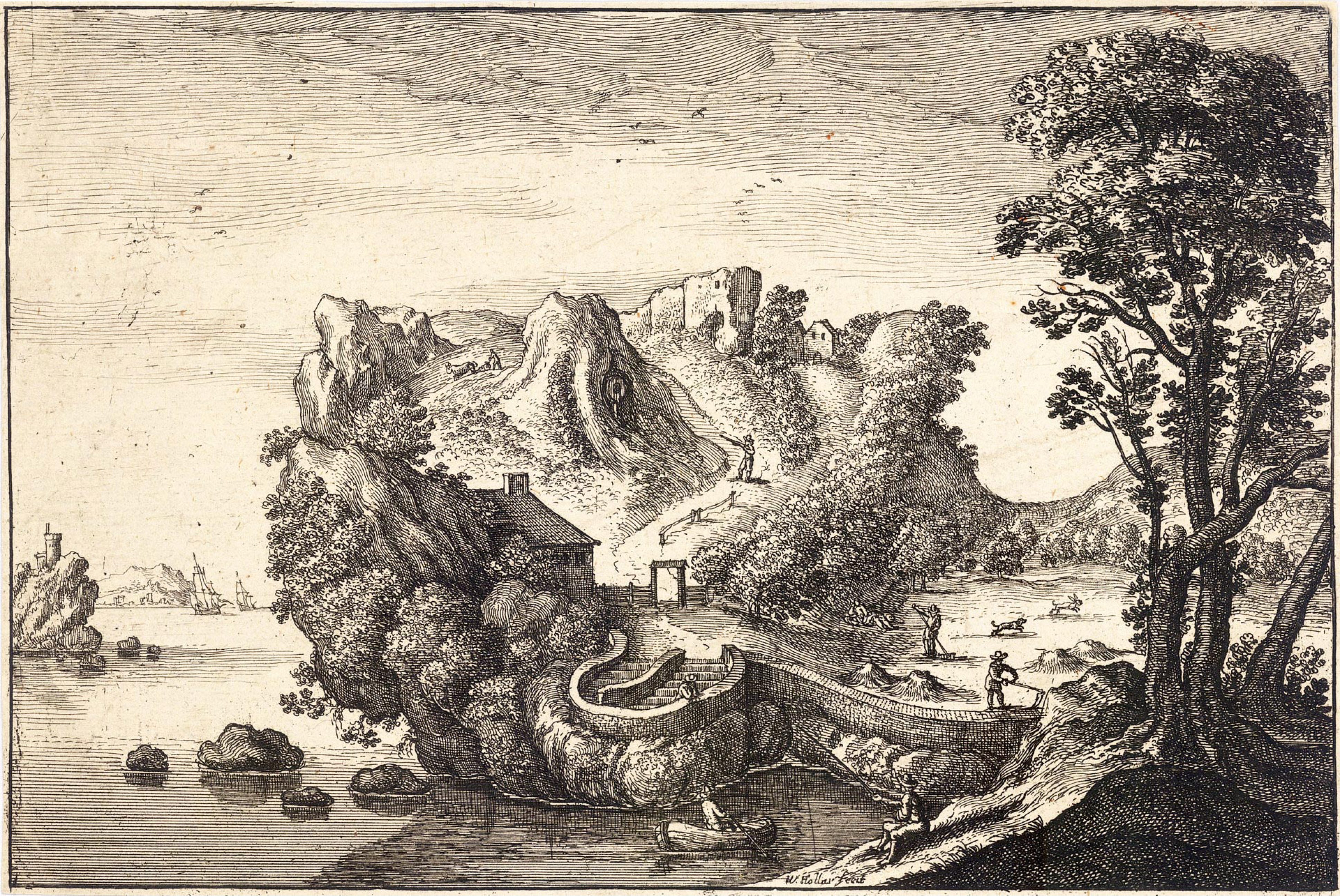

Do you see the trees, the path, the workers in the fields? Or do you see a giant head in the landscape? What, a giant head? Half of the students always focused on the details and lost sight of the big picture, therefore did not recognize the giant head in the picture (once you see it, you cannot unsee it). The business model, like the big head, stands for the big picture. However, the big picture is made up of many detailed smaller components (e.g. trees, streets, workers) and it is easy to get lost in these details. Also within the business model, I can drill deeply into specific key components, such as channels, e.g. closely analyzing the algorithms of different social networks to identify which types of posts drive the most engagement. The details can be handled to such a professional degree that someone can spend a whole working life getting the details right. And not that the details are unimportant, you have several courses on these details for a reason... but this course is about the big picture, about the “the rationale of how an organization creates, delivers and captures value” (Alex Osterwalder).
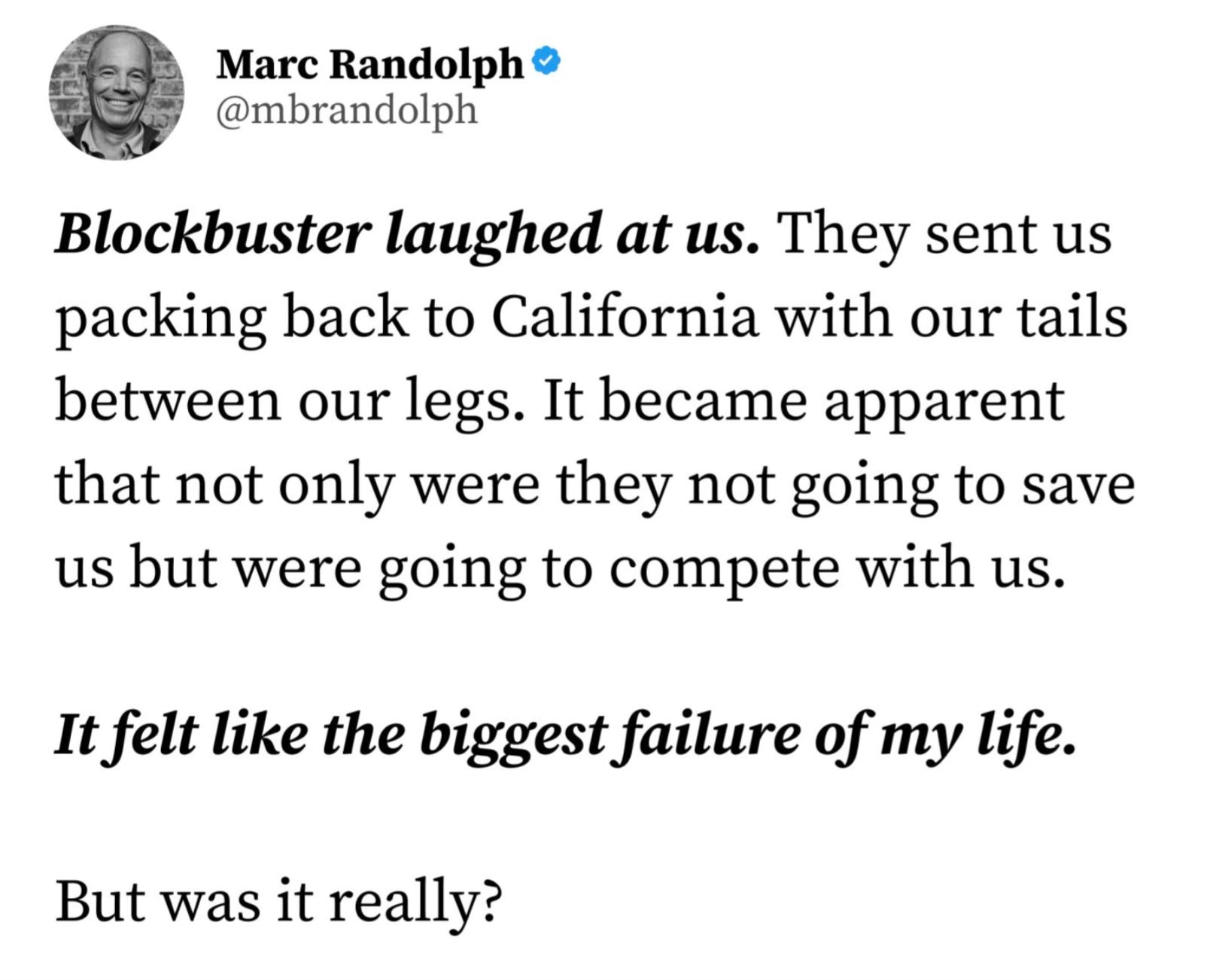
Okay, I hear you thinking, but why do I have to deal with these business models for a semester now? Well, especially digital business models have disrupted numerous industries in recent decades (hello booksellers! What was a video rental store again?). And we are nowhere near the end of the story. Managers in all sectors must therefore at least get their heads around business model innovation in order to understand how they will be affected. Even if it seems like the core offering does not change for some companies (e.g. selling razors), parts of the business model might change, such as the distribution channel, providing an attack vector for new competitors (e.g. selling razor online via subscriptions, hello Dollar Shave Club). And that can be quite dangerous, as we can see from some examples. I'm sure you know the Netflix story, I've heard it a dozen times too, but it's always mind-blowing to me when I hear it again. In 2000, Netflix wanted to sell itself to the video rental giant Blockbuster for $50 million (back then Blockbuster hat 9000+ stores). Blockbuster laughed at the founders, rejected their offer and sent them home. The rest is history… as of today, Netflix has a market capitalization of $450 billion (2026) and Blockbuster is out of business. Netflix co-founder Marc Randolph writes on Twitter (er, sorry, on X) about this incident with Blockbuster:
Digital business models have experienced positive development in recent decades. If you look at the list of the top 10 companies by market capitalization in April 2026, you will see that most of them pursue a digital business model at their core (e.g. Google) or enable digital business models with their products (e.g. Nvidia enables AI applications with their chips). Nvidia now has a market valuation of approximately $4.6 trillion (!) US dollars. To put this into perspective, the total market capitalization of the DAX, Germany’s premier stock market index comprising 40 of the country’s largest publicly listed companies, stands at approximately $2.4 trillion. This includes major players such as SAP, valued at approximately $196 billion, aerospace giant Airbus at $189 billion, automotive leaders like Mercedes-Benz Group with $70 billion and Volkswagen at $63 billion, chemical powerhouse BASF at $47 billion, sportswear icon Adidas at $35 billion, and financial institution Deutsche Bank with a market cap of $62 billion (April 2026).
Okay, I hear you thinking, Nvidia’s market capitalization just shot up because of the AI hype and that will come back down when the hype dies down. Fair point. Some market observers have their doubts too. Yet the scale of AI infrastructure build-out continues to grow: the global semiconductor market is expected to reach $975 billion in annual sales in 2026 — a historic peak fueled by an intensifying AI infrastructure boom (Deloitte, 2026). Nvidia dominates the AI chip market with an estimated ~86% share in the AI GPU segment (Business Research Insights, 2025).
And yes — you read that correctly: the entire global semiconductor industry, every single chip sold on the planet, from AI accelerators to the microcontroller in your washing machine, generates less than a quarter of what investors currently think Nvidia alone is worth. Nvidia’s market cap isn’t just bigger than the semiconductor market — it’s nearly five times bigger. The market is essentially betting that Nvidia will eat the whole pie, bake three more pies, and charge a monopoly rent for the oven.
But, even if there are hypes, bubbles or crashes, the development towards more digitalization and the advancement of digital business models is inevitable in my opinion. But after all, we are at a university here, so I am happy to have a critical discussion about this statement! And we will have enough time for an exchange of opinions. To make sure we have something to discuss when we meet at the university, please make sure you read this accompanying content series!
I look forward to an insightful exchange of thoughts on business models...
Disclaimer: The thoughts published on MadeMeThink are my personal opinion and should not be considered as investment advice or a recommendation for any type of action. I am not a financial expert. The startups, organizations or corporates highlighted in this publication have caught my interest. This mention is not an endorsement or recommendation to engage with them. Readers should always do their own research.